The Tri-Engine Creator: Building a "Second Brain" for Writing, Visual Art, and TTRPGs
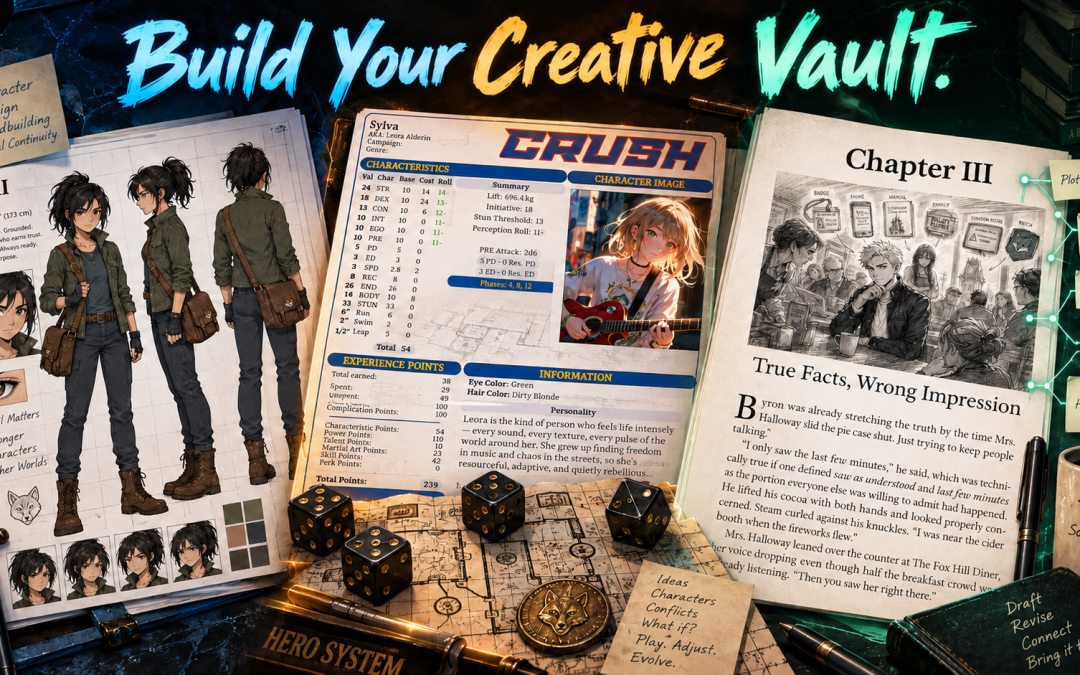
For writers, visual artists, and tabletop roleplaying gamers, creative ideas rarely stay neatly in one lane. A brilliant character concept might emerge during a high-stakes Hero System campaign, get sketched out on a reference sheet over the weekend, and ultimately become the sarcastic mechanic leading a crew through a malfunctioning city in your next sci-fi draft.
The core challenge isn't coming up with ideas—it's managing the fundamental divide between human and machine strengths.
Humans excel at creative synthesis, emotional nuance, and inventive leaps. However, on average, our long-term memory and computational tracking are relatively weak compared to computers, which possess flawless recall and instant processing power. Furthermore, when we write or sketch by hand, we engage kinesthetic and sensory pathways that spark inspiration and anchor memory in ways typing alone cannot match.
By combining tactile human creativity, structured local file storage, and AI-enhanced workspaces like Google NotebookLM or Obsidian you can build a "Second Brain"—an external memory engine that bridges the gap between raw inspiration and finished craft.
Pin this Post
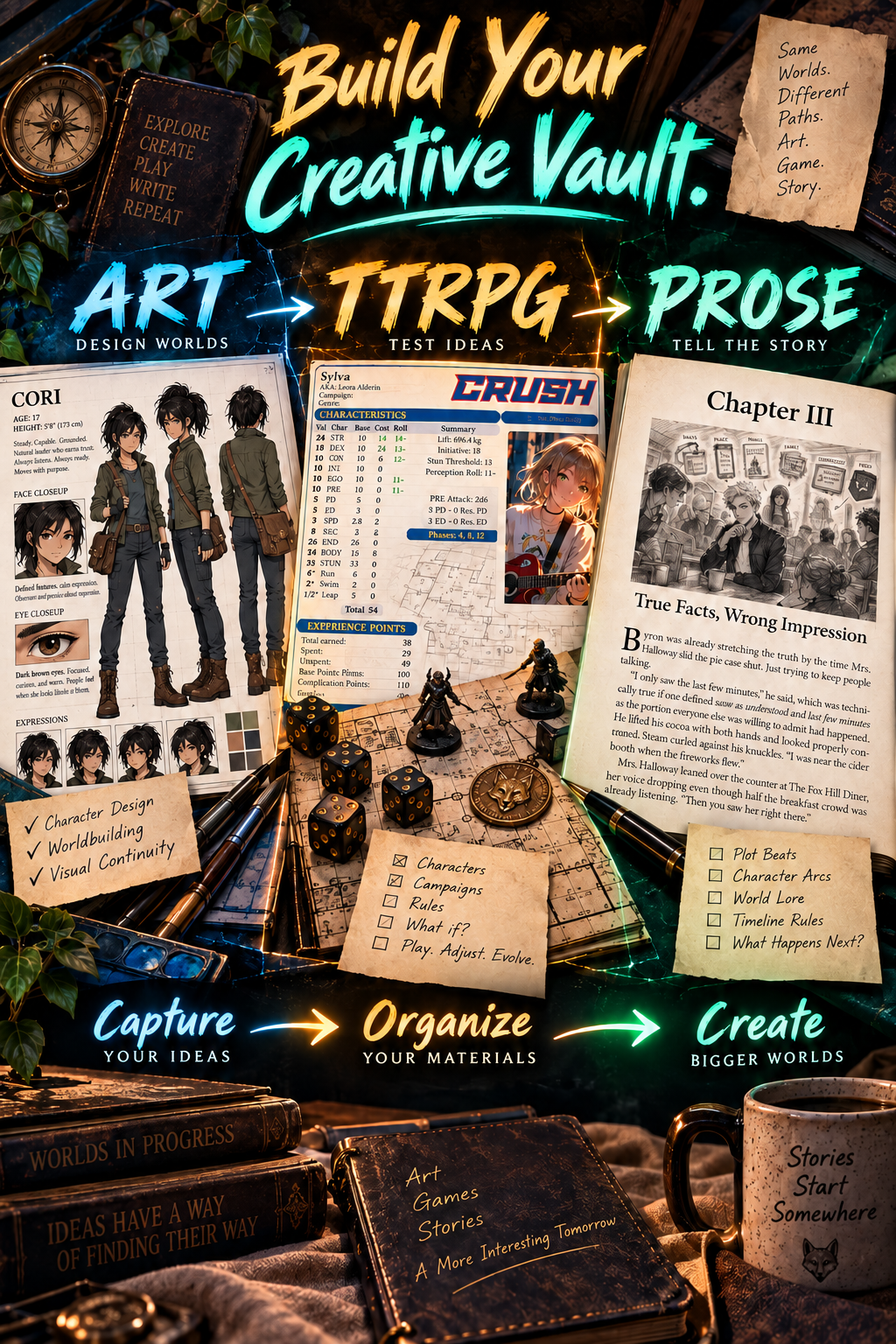
The Three Engines of the Creative Second Brain
1. The TTRPG Sandbox (Hero System & Campaign Lore) Tabletop roleplaying games are the ultimate emergent story generators. Complex systems like Hero System—with its granular point-buy mechanics, powers, and combat maneuvers—demand precise tracking that easily overwhelms human memory.
- The Second Brain’s Job: Store rulebooks, house rules, campaign logs, dynamic faction relationships, and character sheets.
- The Synergy: Instead of letting live-table chaos evaporate after a session, your notes serve as an immediate sandbox to test dialogue rhythms, tactical maneuvers, and character dynamics before adapting them into prose.
2. Visual Art & Character Reference Sheets Visual artists rely on spatial and structural clarity. While raw high-resolution assets, speedpaints, and layered source files belong in structured local folders, your Second Brain hosts the curated visual essence of your worlds.
- The Second Brain’s Job: Store character turnarounds, pose blueprints, and turn character reference sheets into easily queryable visual notes.
- The Synergy: Having reference sheets integrated directly beside your worldbuilding text ensures total visual continuity. You can instantly check a character’s hair length, specific gear layout, or distinct silhouette without digging through file directories.
3. The Fiction Engine (Multi-Genre Writing) Writing requires deep focus and continuous momentum. Whether you cycle between high-stakes science fiction, romance, or fantasy, a Second Brain acts as your permanent project vault.
- The Second Brain’s Job: Track plot outlines, scene beats, world rules (like digital-versus-analog time glitches), and character arcs.
- The Synergy: Rotating between active writing projects, visual design, and TTRPG prep keeps your eyes fresh. You never stare at a blank page because your Second Brain holds a reservoir of pre-assembled ideas ready to be spliced into a manuscript.
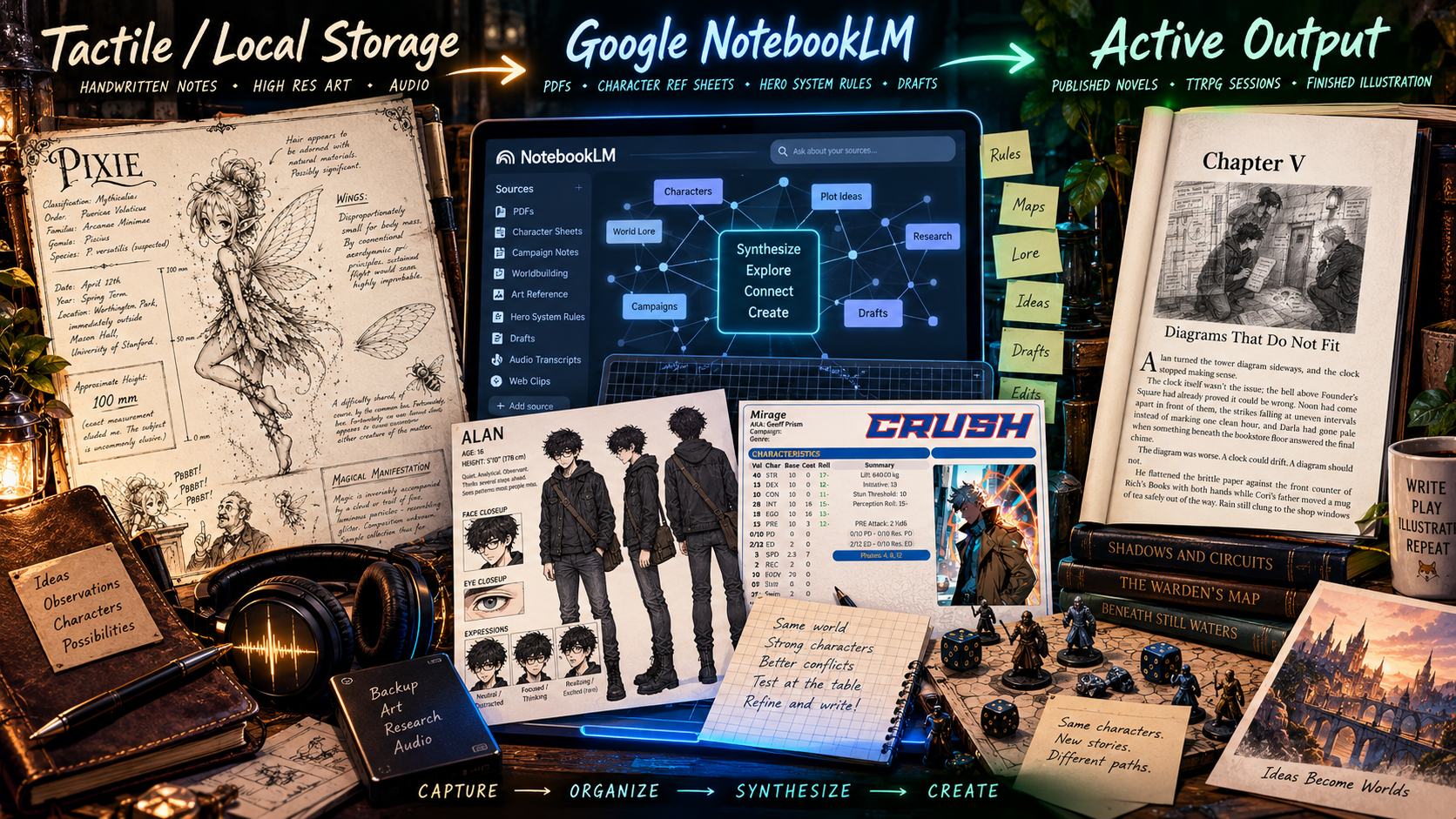
Structuring Your Ecosystem: Local Folders + Google NotebookLM
To keep your system running smoothly, divide your workflow between heavy asset storage and active narrative synthesis:
[ Tactile / Local Storage ] ──> Handwritten Notes, High-Res Art, Audio│▼[ Google NotebookLM ] ──> PDFs, Character Ref Sheets, Hero System Rules, Drafts│▼[ Active Output ] ──> Published Novels, TTRPG Sessions, Finished Illustration
- Local Disk (The Archive): Keep your structured file folders for final image exports, raw PSD files, vector assets, and digitized scans of handwritten notes.
- Google NotebookLM (The Synthesis Engine): Import your PDFs, worldbuilding guides, Hero System rule breakdowns, character reference sheets, and chapter drafts directly into targeted notebooks.
Because NotebookLM grounds its language model exclusively in the sources you upload, it becomes an instant, hyper-accurate research assistant that handles the computational memory load for your worlds.
How to Use NotebookLM Across Your Workflow
- Instant Rules & Stat Lookup: Upload your Hero System core guides and character sheets. Ask: "What are the exact modifiers and Endurance costs for [Character]'s primary attack?" or "Summarize the last three combat encounters in the campaign."
- Visual-to-Prose Translation: Drop your Character Reference Sheets and environmental concept art into a notebook alongside your text. Query the notebook to describe a character's physical presence, outfit details, or mechanical gear in sensory-rich prose.
- Cross-Pollination Queries: Upload a session transcript from your latest TTRPG run and a manuscript chapter. Ask: "Extract the dynamic banter between the mechanic and the magician from the last game session and draft a 300-word dialogue scene for Chapter 2."
- Continuity Guardrails: Use your notebook as a story bible. Ask: "Are there any contradictions between how the city's traffic signal glitch is described in Chapter 1 versus the municipal underbelly lore sheet?"
The Creator’s Dividend: Less Stacking, More Flow
A Second Brain isn't meant to replace human creativity, nor is it meant to generate prose for you. Its true power lies in leveraging the division of labor.
When you use your human brain for sensory brainstorming, sketching, and creative leaps, and let your digital system handle complex Hero System mechanics, character specs, and lore recall, you eliminate cognitive overhead. You free up your mind to do what it does best: invent, sketch, write, and play.



Great article.