Your ideas may appear simple or isolated in your mind right now, but a single, tiny thought is the spark for every great story ever created. No one sits down and envisions a massive, 100,000-word universe all at once. They start with a small step and see where the path takes them.
Think of it this way: the only thing a powerful AI does is calculate the next logical word or concept based on the prompt it's given. The human brain does that naturally when it's focused. However, because our modern days are filled with conflicting information, screen time, and daily stress, our brains get overcrowded. We don't give our thoughts the room to expand.
If you want to turn those "small" ideas into something big, here is a simple, actionable workflow you can start using today:
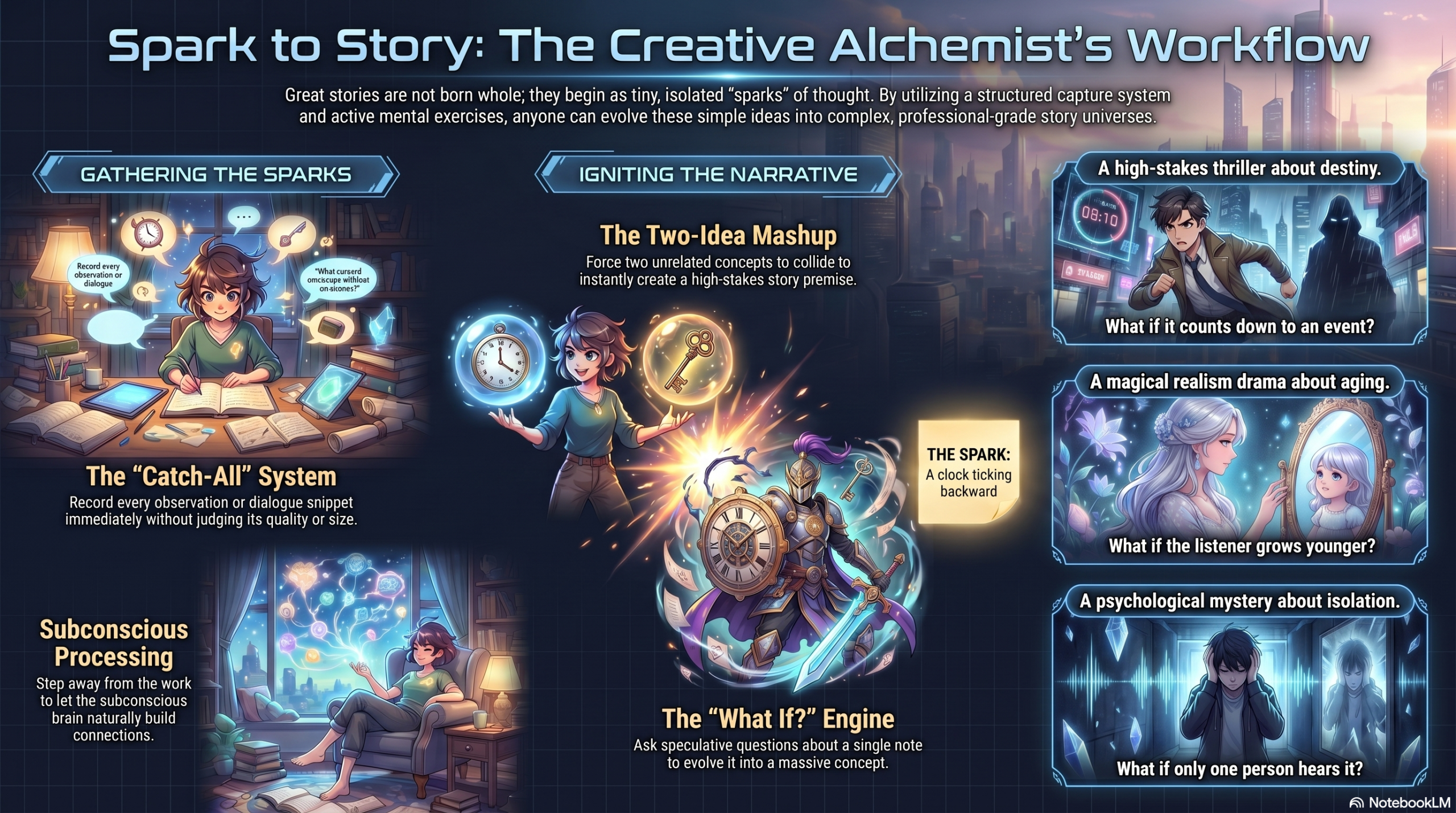
1. Build a "Catch-All" Notebook
Never trust your brain to remember an idea, no matter how small. Carry a pocket notebook or use a dedicated notes app on your phone. (But writing it down is more effective.)
The Rule: Capture everything without judging it. If you see a strange house on your walk, write it down. If you think of a cool line of dialogue, snap a picture or type it out. Don't worry about making it "big" yet; just catch the spark.
2. Let Your Brain "Background Process"
Once an idea is written down, step away. Your subconscious mind is an incredibly powerful processor. When you aren't actively forcing yourself to create, your brain will naturally start making connections in the background while you fold laundry, wash dishes, or take a shower.
3. The "Two-Idea Mashup" Exercise
Small ideas stay small when they live in isolation. The secret to making them big is collision. Once a week, open your notebook, pick two completely unrelated small ideas you've written down, and force them together.
Small Idea A: "A detective who is terrified of the dark."
Small Idea B: "A world where the sun suddenly stops rising."
The Big Idea: Combined, you instantly have the premise for a high-stakes thriller.
4. Ask the Magic Question: "What If?"
When you revisit a small note, play the "What If?" game to see the next logical step. If your small idea is “A grandfather clock that ticks backward,” ask yourself:
What if it’s counting down to a specific event?
What if only one person in the house can hear it?
What if every time it ticks backward, the person grows a day younger?
By answering just one or two of those questions, your small thought naturally evolves into a massive concept.
Don't worry about the size of your ideas right now. Just start capturing the small steps, revisit them often, and trust your brain to do the math. You’ll be amazed at the inspiration that strikes when you give your thoughts a place to grow!