
The enforcement of Article 50 under the European Union’s AI Act mandates strict transparency rules for synthetic media. For publishers, indie authors, and cover designers, the takeaway is clear: photorealistic AI-generated human figures require visible disclosure or machine-readable provenance metadata.
Because ebook covers serve as both packaging and primary retailer thumbnails, hiding disclosures on a physical back-cover blurb isn't an option for digital formats. While large-scale enforcement and court interpretations will evolve over time, the immediate goal for creators is simple: stay compliant without cluttering the cover art with intrusive "Made with AI" labels. None of us want this.
Genres Most Affected by Synthetic Labeling
Any genre relying on photorealistic human portraits or atmospheric stock-style composites will feel the friction of these rules:
-
Romance & Dark Romance (Mafia, Billionaire, Romantic Suspense): Driven heavily by photorealistic torso and close-up character portraits where facial features and muscular physique set reader expectations.
-
Thrillers, Mystery & Crime: Uses realistic, atmospheric composites of human silhouettes, shadowed faces running down alleys, or dramatic close-ups of victims and investigators.
-
Urban Fantasy & Paranormal Romance: Features photorealistic heroines and heroes blended with magical effects, glowing eyes, or urban backgrounds.
-
Historical Fiction: Relies on photographic composites placing realistic models into period-accurate costumes and historical settings.
-
Sci-Fi & Cyberpunk: Frequently uses hyper-realistic renders of augmented humans, starship pilots, and futuristic citizens.

Pin This Post
Creative Pivots: Adapting Without Sacrificing Visual Appeal
Designers can shift their visual approach to maintain genre appeal while bypassing the "photorealistic synthetic human" trigger altogether. Take a look at these options and see which one may fit your book.
1. The "Neck-Down" & Silhouette Crop
Instead of featuring full, photorealistic facial features, alter the composition to focus on attire, pose, and body language.

(Non-Compliant / Requires Label): A close-up, photorealistic portrait of a dark mafia hero with fully rendered facial features.

(Shifted Approach): A neck-down crop focusing on a tailored suit, dark tattoos, and hands adjusting cufflinks under a shadowed lamp.
Why it works: Romance and thriller audiences rely heavily on fashion and physical presence to identify tropes. Removing distinct facial features eliminates deepfake likeness issues while keeping the mood intact.
2. Transitioning to Stylized Digital Art
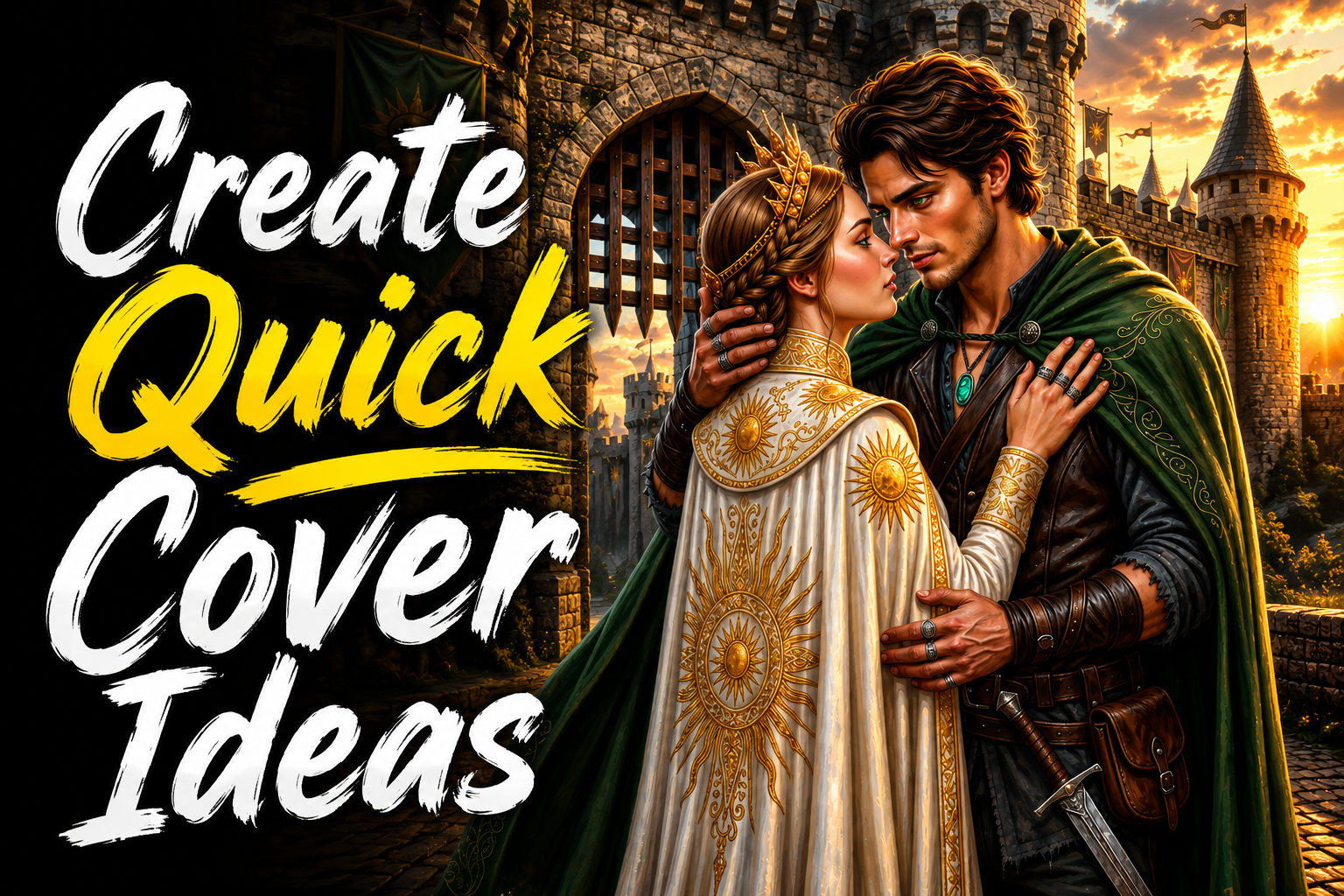
Article 50 focuses on synthetic depictions that could pass for real humans. Shifting from photographic renders to painterly, 2.5D, or comic illustration styles naturally signals artistic intent rather than a synthetic human deepfake.

(Non-Compliant / Requires Label): A hyper-realistic photographic render of an Urban Fantasy heroine with glowing magic.

(Shifted Approach): The same pose and color palette, rendered in a stylized, semi-painted digital illustration art style.
Why it works: It preserves the character's presence, color palette, and action while moving out of the "photorealistic human" category.
3. Symbolic & Object-Driven Framing
Replace the central human figure entirely with a focal object that carries strong genre symbolism—a blood-stained crown, a dagger, a luxury sports car, or a dark estate.

(Non-Compliant / Requires Label): A realistic male model standing in front of a luxury Italian villa.

(Shifted Approach): A close-up shot of an ornate signet ring resting on an leather-bound ledger, with the glowing villa blurred in the background.
Why it works: Dark Romance, Fantasy, and Thrillers already thrive on object-driven imagery. Rich typography and moody lighting carry the atmospheric weight.
4. The Hybrid Photomontage
Use traditional, licensed stock photography for the main human character's face/body, and reserve AI tools strictly for environment design, lighting, or background props.

(Non-Compliant / Requires Label): A fully AI-generated model sitting in an AI-generated dark lounge.

(Shifted Approach): A licensed real-model stock photo seamlessly integrated into an AI-rendered, similar setting.
Why it works: The human element remains 100% authentic, keeping the character exempt from synthetic human labeling, while the cover still benefits from rich AI-generated worlds.
5. Integrated Corner Badging
For covers that must keep photorealistic AI models, design a subtle, integrated disclosure badge directly into the typography grid or border frame, similar to an age rating or price seal.

(Non-Compliant / Unlabeled): A photorealistic AI model cover with no visible synthetic disclosure.

(Shifted Approach): The same cover featuring a sleek, minimal "AI Model" text badge or EU-recognized icon embedded cleanly into the bottom corner border.
Why it works: It fulfills Article 50's requirement for clear disclosure without ruining the main focal art.
Final Recommendation: Know Your Risk Tolerance
Your cover strategy ultimately depends on your brand and your risk tolerance in the EU market:
-
Lowest Risk (Recommended): Pivot to stylized, semi-painted, or vector illustrations if that can fit your genre. You gain complete visual freedom without triggering synthetic human deepfake rules.
-
Higher Risk (Photorealistic AI & Composites): If you stick with photographic visuals, manage your compliance by using neck-down crops/silhouettes, adopting hybrid photomontages (real stock models over AI backgrounds), or adding sleek, integrated front-cover disclosure badges to your layout.
As courts and public opinion refine how the EU AI Act is enforced, taking a proactive, stylized approach protects your catalog from regulatory friction while keeping your covers commercially sharp.