
Why Your Characters Need Structural Flaws to Feel Real
If you’ve been hanging around tabletop role-playing games for any length of time, you’ve probably encountered a wide variety of character generation mechanics. In our neck of the woods, we’ve been playing RPGs forever. While Dungeons & Dragons is the household name, our absolute favorite system to use—and the one we’ve leaned on for decades—is the Hero System.
Why? Because the Hero System understands something fundamental about balance.
In that game, every character starts with the same budget of points. If you want to build a character with massive, world-altering superpowers, you can’t just have them for free. You have to balance that point budget by taking on severe disadvantages.
When we transition from running games at the table to writing fiction, this exact same rule applies. We call it narrative weight.
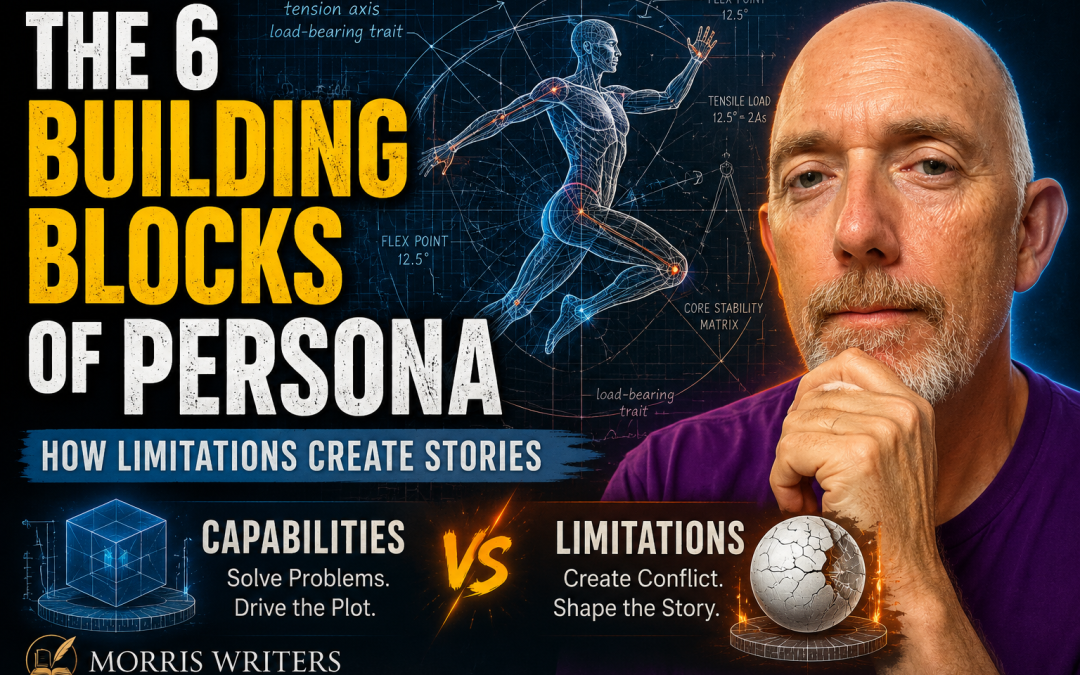
In a novel, your protagonist's capabilities are what they use to solve problems. But their limitations? Their limitations are what actually create the story.
The Danger of the Tensionless Hero
In fiction, if you give a character a highly influential asset—whether that’s a massive superpower, unbelievable luck, or extreme wealth—without an equally weighty narrative flaw, you run into a major problem. You create a "Mary Sue" or "Gary Sue."
These are characters who glide through obstacles without scratching their paint. They lack friction, which means your story lacks tension. If a reader never believes a character can fail, they will stop turning the page.
To earn reader empathy and generate automatic story hooks, you need to look at your character bible through the lens of architectural engineering. You must shatter a powerful foundation with heavy, load-bearing flaws.
Here is the 6-part blueprint we use to build balanced, deeply compelling characters.
The 6 Building Blocks of Character Design
1. Characteristics (The Baseline)
This is your character's innate physical and mental baseline—their raw strength, intelligence, and quickness. In a balanced system, a typical person sits at a baseline, while legends and superhumans scale exponentially upward.
-
The Story Friction: Your character’s stats dictate how they think. If they are brilliantly smart but physically weak, they have to think their way out of a corner. If they are a powerhouse but lack intelligence, they’re going to try to punch their way through—even when a problem requires a scalpel.
2. Skills & 3. Talents (Learned vs. Innate)
-
Skills are practical, studied competencies. These are things your character went to school for, practiced on the job, or mastered through grit—like criminology, picking pockets, or advanced physics.
-
Talents are minor, innate genetic gifts that border on the superhuman but aren't quite full-blown magic. Think of things like an absolute time sense or an eidetic memory.
4. Perks (Social Assets)
Perks are worldly, societal benefits. Think of characters like Batman: he doesn't have literal superpowers, but he has the ultimate perk—unlimited wealth. Perks can also include things like noble birthrights, special clearance, or followers (like a younger sidekick or a consistently underestimated pet who saves the day at the eleventh hour).
5. Powers & Mysticism (Engineering the Impossible)
Whether you are writing fantasy, sci-fi, or superhero fiction, powers are the things that break the laws of physics. But to make magic or advanced technology feel grounded and real, it must have an architectural limit.
-
Does the spell require a specific physical gesture or an incantation? (Can your mage be neutralized simply by being gagged?)
-
Does the power require a focus, like an amulet, a wand, or a specialized weapon with a limited number of charges that might burn out if fired too long?
6. Disadvantages & Complications (The Engine of the Plot)
This is the most critical block. A true disadvantage must inconvenience your character constantly. It can't just show up once for a minor plot point and vanish. It needs to create friction in their public life, their work, and their relationships.
Here are a few classic narrative complications to weave into your protagonist's build:
-
Psychological Limitations: These aren't just quirks or preferences; they are absolute compulsions. If your hero has a strict moral code against killing or harming innocents, your antagonist will inevitably exploit that by creating a hostage situation. If your hero is driven by blinding vengeance or overconfidence, it will naturally force them into situations they are completely unprepared for.
-
Dependent Characters: The frail relative, the demanding boss who constantly interferes with their goals, or a spouse who lives in their secret sanctum but gets captured when they venture out into the world.
-
Distinctive Features & Susceptibilities: Physical mutations, distinct scars, or traits that trigger immediate social prejudice and make it impossible to blend into a crowd. Alternatively, biological weaknesses—like a portal-fantasy protagonist who relies on daily anti-seizure medication but suddenly finds themselves trapped in a medieval world without a pharmacy.
-
External Pressures: Being hunted by the law, a secret government agency, or dealing with a bitter rival who is constantly trying to upstage them.
Build the Flaw, and the Story Writes Itself
When you weave these building blocks together, your plot points begin to generate themselves. If you have a character who can summon extra-dimensional creatures, but you give them a psychological code against using violence, every encounter becomes a brilliant puzzle. If you give a character a danger sense, but hunt them with a relentless secret society, the tension never lets up.
Don't just give your characters the ability to fly. Give them a paralyzing fear of heights. Give them a fragile tether to the ground, or an enemy waiting in the clouds.
Shaping your characters with load-bearing flaws doesn't make them weak—it makes them human. And that is exactly what keeps readers coming back for more.
What about you? What is your absolute favorite flaw or complication to give a protagonist to keep them grounded? Let us know in the comments below!