If you’ve been following the latest news around Substack, you might have heard that they recently partnered with Pangram, an AI detection tool meant to scan posts and flag AI-generated content.
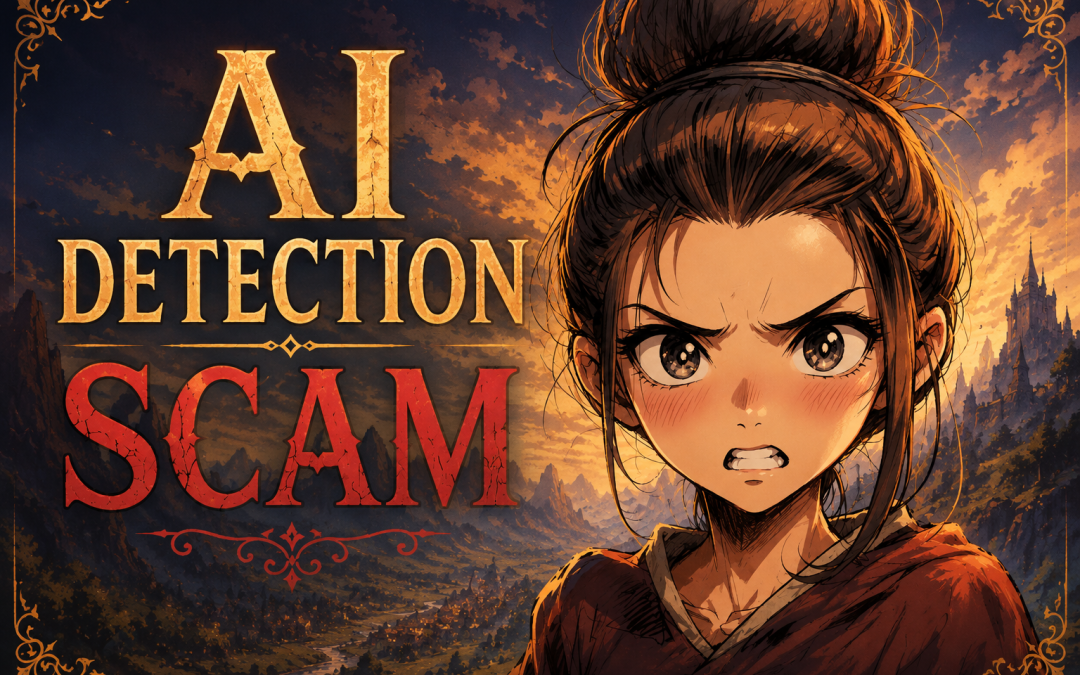
On paper, it sounds like a well-intentioned feature for readers who want "human-only" writing. In practice, it’s an absolute disaster—and a complete scam.
Writers across Substack have been putting Pangram (and similar AI detectors) to the test, and the results are as absurd as they are frustrating.

Pin This Post
The Paradox: Write Well, Get Flagged as AI
Here is the dirty secret of AI detection software: It doesn't detect AI. It detects adherence to good writing mechanics.
I’ve been writing blog posts for a great many sites for over 20 years. That’s two decades of refining tone, polishing cadence, mastering structure, and building a distinct voice through sheer, relentless practice.
And yet, according to these shiny new detection tools, two decades of human effort now instantly get classified as machine-generated text.
It raises an obvious question: Am I being flagged as an AI because my writing is polished, or is it because these LLMs were trained on my writing (and millions of other real writers' work) in the first place?
When authors upload 100% original, human-written drafts that they just typed up themselves, these tools routinely flag them as 100% AI-generated.
What triggers the detector?
-
Clean grammar and no typos
-
Proper use of semicolons and em dashes (—)
-
Oxford/serial commas
-
Lists of three (a standard rhetorical device human brains naturally favor)
In other words: If you write clean, polished, error-free prose, the detector assumes a machine wrote it.
How to Beat the Algorithm? Write Badly.
The absurd workaround to avoid being flagged by Pangram is to deliberately sabotage your own work.
If you take a piece of original prose that was flagged as 100% AI and intentionally throw in a typo, a misplaced comma, or a glaring grammatical error, suddenly the detector changes its mind: “100% Human!”
We have reached a bizarre point in literary history where flawless execution is treated as proof of artificiality, and sloppy mistakes are required to prove humanity.
The Real Cost: A Digital Witch Hunt
As author Kevin Tomlinson pointed out in a recent discussion on the Wordslinger Podcast, this isn't just an annoying quirk of software—it's a modern-day witch hunt with real-world consequences.
-
Destroying Careers with Zero Evidence: Outside of blogging, these exact detectors are being used in academia and traditional publishing. Students have received failing grades despite showing version histories, and authors have had signed publishing contracts revoked—all based on false positives from software that is about as accurate as a broken clock.
-
You Are Training the AI with Other People's Work: Every time a reader, editor, or professor takes an author’s original work and pastes it into an "AI detector" to see if it's real, they are feeding that text into a database. They are actively training third-party AI models on non-consenting authors' intellectual property under the guise of "detecting" it.
-
Missing the Point of Reading: If a piece of writing entertains, moves, educates, or inspires you, its origin shouldn't trigger an inquisitorial audit. Constantly scanning prose for "proof of life" replaces the joy of reading with paranoia.
What Should Writers (and Substack) Do?
AI detection software relies on pattern recognition, not actual proof. Because LLMs were trained on millions of pages of published human writing from the last twenty years, any experienced human who writes well will inevitably trigger the same statistical patterns the AI was trained to mimic.
Integrating flawed tools like Pangram into publishing platforms doesn't protect readers or empower creators—it penalizes good craftsmanship and rewards noise over quality.
Stop the witch hunt. Refuse to validate AI detectors.
If you like what you're reading, enjoy it. If you suspect a piece is machine-generated garbage and don't want to read it, close the tab and move on. But let’s stop demanding that writers pepper their work with typos just to prove there's a heart beating behind the keyboard.