AI Is a Powerful Tool, But It Can't Tell Your Story
Artificial intelligence has become one of the most debated topics in the writing world. Some claim it's the future of storytelling, while others believe it's the end of creativity. The truth lies somewhere in between.
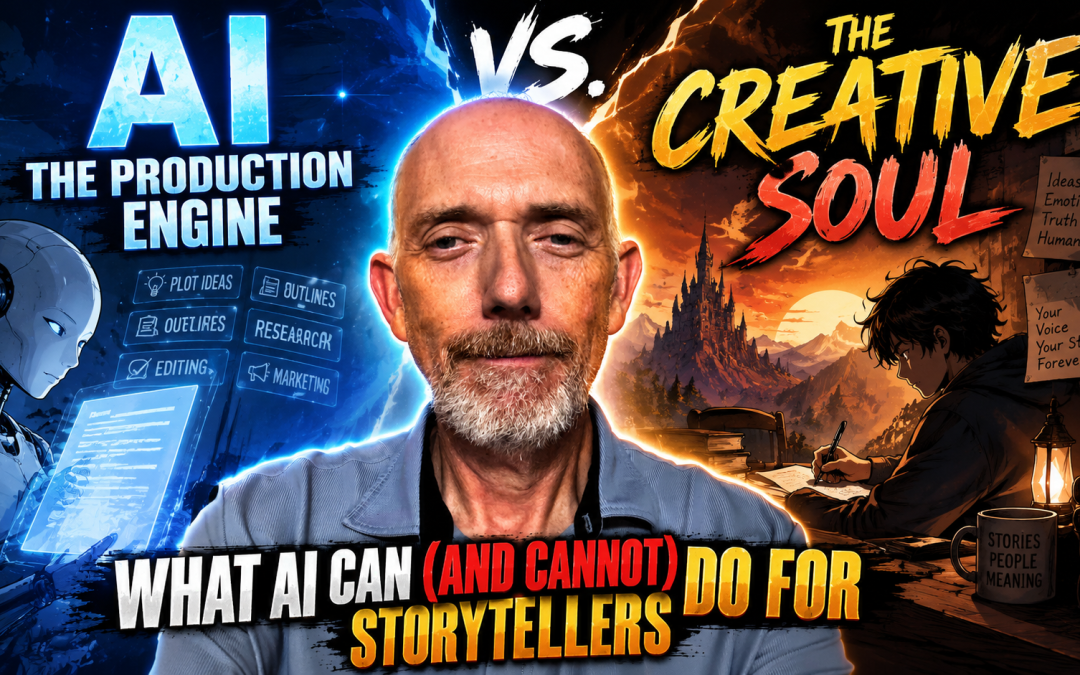
In this video, I explore where AI genuinely excels—and where it falls short.
AI is incredibly useful for the production side of writing. It can help overcome writer's block, organize story bibles, speed up research, proofread drafts, generate marketing copy, and handle countless administrative tasks that consume a writer's time. Used wisely, it can save authors hundreds of hours.
But storytelling isn't built on efficiency alone.
The heart of great fiction comes from human experience: authentic emotion, subtext, humor, moral complexity, original voice, and the unexpected choices that make readers fall in love with a story. These are qualities that don't emerge from statistical prediction—they come from the unique perspective of the author.
The takeaway is simple: let AI help with the work around your writing, not the writing that defines you.
Treat AI as your research assistant, editor, archivist, and production engine—but protect the one thing no software can replicate: your creative voice.
Watch the full video to discover 10 things AI does exceptionally well for writers, 10 things it struggles to do, and how to use it in a way that strengthens your storytelling instead of replacing it.